Showing posts with label Advocacy. Show all posts

Sunday, January 12, 2014

Children, it's ok to be in PR. Just be ethical.


When things go wrong in politics, things tend to go right for the media. Political corruption lead stories and exposés (local and national) can be the stuff on which journalism careers are made.

Because of this duality, it's no surprise that a well-respected (and well-followed) journalism academic and commentator, Jeff Jarvis, would chime in on the recent #bridgegate scandel in New Jersey. Quick recap: NJ Gov. Chris Christie fired a deputy chief of staff as part of some fallout over what apparently was a politically motivated George Washington Bridge toll booth and lane closure issue.

On Friday evening, Jarvis was tweeting screen captures from released government staff emails involving early reporting and a Wall Street Journal inquiry into Fort Lee toll booth topic that lead to "stonewalling." Most of his commentary was about what one would expect from a journalism associate professor.

However, one of his tweets raised the hairs on the back of my neck when he wrote: "Children, this is why you don't want to be a flack for a living."
Well thanks, Jeff. </sarcasm>

Let's just go ahead and paint the PR profession with the same damaging brushstroke because some political staffers (perhaps with questionable ethics) wrote some internal emails trying to figure out their next steps. Of course they should know by now that electronic communication within government agencies falls under FOIA rules and tend to eventually see the light of day. Duh.

What bugged me is that Jarvis picked this episode to flippantly dismiss thoughts by students of going into public relations, strategic communications or really any career in which one might be referred to as a "flack" for an organization. To be clear, I do not believe for a second that his remark will be the deciding factor for a student exploring the field of mass communications to scoff at PR. To me, it's just sad (infuriating?) reminder that our profession gets a bum rap.

It's up to us as PR professionals to practice strategic communications in an ethical manner. We should be among the chorus of calls for transparency, honesty, and open communication. I'll leave you with the charge given to us from the PRSA Code of Ethics. The Code advises PR professionals to:
  • Protect and advance the free flow of accurate and truthful information.
  • Foster informed decision making through open communication.
  • Protect confidential and private information.
  • Promote healthy and fair competition among professionals.
  • Avoid conflicts of interest.
  • Work to strengthen the public’s trust in the profession.
Perhaps even academics like Jeff Jarvis can appreciate their future hacks working with ethical flacks. (tongue-firmly-in-cheek!) Or at the very least, I hope he understands that ethical PR pros actually do exist.

Photo credit: tracylee via Flickr Creative Commons

Friday, August 2, 2013

Burrito that cried wolf and smelly sockpuppetry: Lessons in #PRethics

If you are intentionally deceptive with your communications, you're doing it wrong. Two recent cases of fake identities and deceptive misrepresentation should give pause to PR pros from using these types of unethical tactics that harm the profession:

#1 The Case of Burrito that cried wolf

According to Mashable, the Chipotle brand looked like its @ChipotleTweets account had be hacked due to a "series of confusing and seemingly random tweets over the course of an hour." In a Mashable follow-up post, the company admitted through a spokesperson that it faked having its account hacked as part of a publicity stunt tied to its 20th anniversary promotional campaign. (Wait, what!?)
"'We thought that people would pay attention, that it would cut through people's attention and make them talk, and it did that,' Chris Arnold, a Chipotle representative, told Mashable in an interview. 'It was definitely thought out: We didn't want it to be harmful or hateful or controversial.'"
While not getting into a content marketing/advertising debate on whether or not brands should/should not lie to generate buzz, customers, etc. I'll just go with this is wrong and it fails the ethics smell test.
Nope, there was never "a little problem" with their account. They knew exactly what was going on, and that's the troubling part.

I sincerely hope a public relations professional was not in the vicinity of this final decision by Chipotle. A good PR pro worth her/his salt would advise against an online misrepresentation tactic because it makes the brand look ethically-challenged.

Related:

Speaking of failing the ethics smell test...

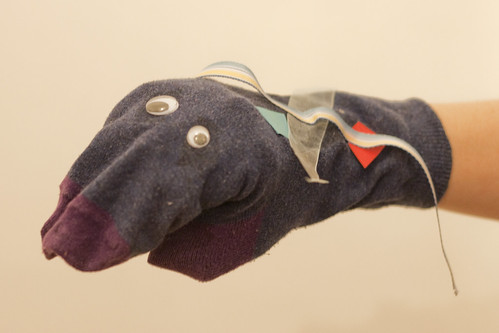
#2 The Case of the smelly Sockpuppet

A former well-known Dallas/Ft. Worth TV news anchor turned communications consultant was recently outed for work "as a consultant for Dallas police-fire pension lawyers, used online aliases to attack opponents and promote pension officials" as well as a downtown Dallas luxury residential high-rise. Repeat after me: creating and using fake social media profiles for the purposes of misrepresentation and obfuscation is wrong, wrong, dirty and wrong.

Thanks to the Dallas Morning News for investigating this sockpuppetry and special thanks to Fort Worth Star-Telegram columnist, Bud Kennedy for shedding light on this from a communications professional perspective referrencing the PRSA Code of Ethics.
Communications professionals call it other names. 
“The use of deceptive identities … constitutes improper conduct” under the ethics code of the New York-based Public Relations Society of America, the leading professional organization. 
A word is underlined for emphasis: Professionals “should not engage in … anonymous Internet postings.”
Thanks, Bud.
###

A "special obligation to operate ethically"

PRSA affirms its commitment to ethical practices, stating that “the level of public trust PRSA members seek, as we serve the public good, means we have taken on a special obligation to operate ethically.” Members are called to “serve the public interest by acting as responsible advocates for those we represent” and “provide a voice in the marketplace of ideas, facts, and viewpoints to aid informed public debate.”

But haven't the rules changed a bit because of social media, culture, and online activities? The short answer for PR pros: No! The ethical values of advocacy, honesty, expertise, independence loyalty and fairness are still true today for professional communicators.

In 2008, PRSA issued among its advisories one that directly addresses the question of deceptive online practices and the misrepresentation of organizations and individuals and includes the following statement:
The use of deceptive identities or misleading descriptions of goals, causes, tactics, sponsors or participants to further the objectives of any group constitutes improper conduct under the PRSA Member Code of Ethics and should be avoided. PRSA members should not engage in or encourage the practice of misrepresenting organizations and individuals through the use of blogs, viral marketing, social media and/or anonymous Internet postings.
Photo credit: darrenkw via Flickr Creative Commons

Sunday, March 17, 2013

Get to know the PRSA Code of Ethics like the back of you hand

Score one more for the value of the Public Relations Society of America. Last week, PRSA launched an app for the Code of Ethics.

Oh no, public relations ethics. How boring.
Wrong!

PR ethics is what separates the wheat from the chaff. It separates those public relations professionals who are useful and valuable to an organization from those that are all but worthless.
The Public Relations Society of America (PRSA) is committed to ethical practices. The level of public trust PRSA members seek, as we serve the public good, means we have taken on a special obligation to operate ethically...Each of us sets an example for each other - as well as other professionals - by our pursuit of excellence with powerful standards of performance, professionalism, and ethical conduct....We believe our professional values are vital to the integrity of the profession as a whole.
Codes of ethics are not unique to PRSA, a quick search of a few other related communication organizations, National School Public Relations Association, International Association of Business Communicators and the Society of Professional Journalists, found well-crafted and robust ethics guidelines.

According to the announcement, the ethics app provides easy reference to PRSA’s Code and Statement of Professional Values and Code provisions. It also includes:
  • PRSA ethics-related blog posts
  • Professional Standards Advisories which offer timely guidance on emerging ethics issues such as illegal recordings, ethical use of interns, professional conflicts of interest, use of VNRs as a PR tool, etc.
  • Email access to members of PRSA’s Board of Ethics and Professional Standards
  • A short Ethics Quiz
The PRSA Ethics app is available for free for Android devices on Google Play and Apple iOS devices. Is this mobile ethics app a game-changer for the profession? Probably not. What it tells me is that the PRSA continues to find ways to provide resources to its membership for the benefit of the public relations profession.

Good work and thank you, PRSA.

Friday, March 15, 2013

We Choose Texas Public Schools


Over the last decade, it seems numerous groups have thankfully formed to advocate for public school districts across Texas. While these groups have strong commitments to public education, each has its own vision, mission, and objectives, often leaving school districts, parents, employees and public school supporters without a simple unifying message or call to action. My hope is for more people to stand up and say, "We Choose Texas Public Schools."

We Choose Texas Public Schools is a concept campaign offered freely for public school district communities, parents, students and staff. I came up with it for a public education celebration rally in February that my school district hosted with four other districts in North Texas. We had yard signs (pictured above) made to distribute to attendees. (The cost of these signs was covered by a sponsor.)

School choice continues to be a major topic of debate and conversation both in the Legislature and out in the public space. Texas public schools educates nearly 5 million students. I'm not going to delve into the arguments for/against restoring state education funding, school vouchers, high stakes testing, or other un-funded mandates in this space. Again, there are other public education advocacy groups already making positive steps for these debates. Healthy debate is good in my opinion. I offer this simple idea as a counter-message to the negative notion repeated again and again that students are “stuck” in public schools. In actuality, many families simply choose public education. I want to give a unifying message for those parents who freely choose Texas public schools.

Be proud, Texans and share that choice.
Please feel free to share, use, distribute the We Choose Texas Public Schools concept. I've shared the PDF of the yard sign art for others to use. I look forward to seeing how this concept develops.