Showing posts with label Ethics. Show all posts

Sunday, January 12, 2014

Children, it's ok to be in PR. Just be ethical.


When things go wrong in politics, things tend to go right for the media. Political corruption lead stories and exposés (local and national) can be the stuff on which journalism careers are made.

Because of this duality, it's no surprise that a well-respected (and well-followed) journalism academic and commentator, Jeff Jarvis, would chime in on the recent #bridgegate scandel in New Jersey. Quick recap: NJ Gov. Chris Christie fired a deputy chief of staff as part of some fallout over what apparently was a politically motivated George Washington Bridge toll booth and lane closure issue.

On Friday evening, Jarvis was tweeting screen captures from released government staff emails involving early reporting and a Wall Street Journal inquiry into Fort Lee toll booth topic that lead to "stonewalling." Most of his commentary was about what one would expect from a journalism associate professor.

However, one of his tweets raised the hairs on the back of my neck when he wrote: "Children, this is why you don't want to be a flack for a living."
Well thanks, Jeff. </sarcasm>

Let's just go ahead and paint the PR profession with the same damaging brushstroke because some political staffers (perhaps with questionable ethics) wrote some internal emails trying to figure out their next steps. Of course they should know by now that electronic communication within government agencies falls under FOIA rules and tend to eventually see the light of day. Duh.

What bugged me is that Jarvis picked this episode to flippantly dismiss thoughts by students of going into public relations, strategic communications or really any career in which one might be referred to as a "flack" for an organization. To be clear, I do not believe for a second that his remark will be the deciding factor for a student exploring the field of mass communications to scoff at PR. To me, it's just sad (infuriating?) reminder that our profession gets a bum rap.

It's up to us as PR professionals to practice strategic communications in an ethical manner. We should be among the chorus of calls for transparency, honesty, and open communication. I'll leave you with the charge given to us from the PRSA Code of Ethics. The Code advises PR professionals to:
  • Protect and advance the free flow of accurate and truthful information.
  • Foster informed decision making through open communication.
  • Protect confidential and private information.
  • Promote healthy and fair competition among professionals.
  • Avoid conflicts of interest.
  • Work to strengthen the public’s trust in the profession.
Perhaps even academics like Jeff Jarvis can appreciate their future hacks working with ethical flacks. (tongue-firmly-in-cheek!) Or at the very least, I hope he understands that ethical PR pros actually do exist.

Photo credit: tracylee via Flickr Creative Commons

Friday, August 2, 2013

Burrito that cried wolf and smelly sockpuppetry: Lessons in #PRethics

If you are intentionally deceptive with your communications, you're doing it wrong. Two recent cases of fake identities and deceptive misrepresentation should give pause to PR pros from using these types of unethical tactics that harm the profession:

#1 The Case of Burrito that cried wolf

According to Mashable, the Chipotle brand looked like its @ChipotleTweets account had be hacked due to a "series of confusing and seemingly random tweets over the course of an hour." In a Mashable follow-up post, the company admitted through a spokesperson that it faked having its account hacked as part of a publicity stunt tied to its 20th anniversary promotional campaign. (Wait, what!?)
"'We thought that people would pay attention, that it would cut through people's attention and make them talk, and it did that,' Chris Arnold, a Chipotle representative, told Mashable in an interview. 'It was definitely thought out: We didn't want it to be harmful or hateful or controversial.'"
While not getting into a content marketing/advertising debate on whether or not brands should/should not lie to generate buzz, customers, etc. I'll just go with this is wrong and it fails the ethics smell test.
Nope, there was never "a little problem" with their account. They knew exactly what was going on, and that's the troubling part.

I sincerely hope a public relations professional was not in the vicinity of this final decision by Chipotle. A good PR pro worth her/his salt would advise against an online misrepresentation tactic because it makes the brand look ethically-challenged.

Related:

Speaking of failing the ethics smell test...

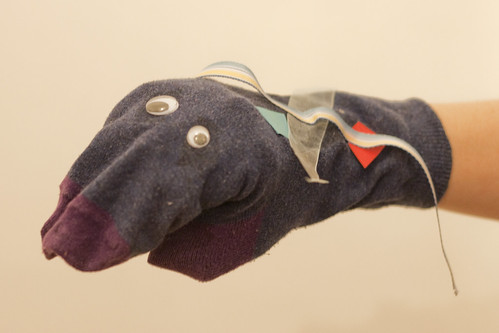
#2 The Case of the smelly Sockpuppet

A former well-known Dallas/Ft. Worth TV news anchor turned communications consultant was recently outed for work "as a consultant for Dallas police-fire pension lawyers, used online aliases to attack opponents and promote pension officials" as well as a downtown Dallas luxury residential high-rise. Repeat after me: creating and using fake social media profiles for the purposes of misrepresentation and obfuscation is wrong, wrong, dirty and wrong.

Thanks to the Dallas Morning News for investigating this sockpuppetry and special thanks to Fort Worth Star-Telegram columnist, Bud Kennedy for shedding light on this from a communications professional perspective referrencing the PRSA Code of Ethics.
Communications professionals call it other names. 
“The use of deceptive identities … constitutes improper conduct” under the ethics code of the New York-based Public Relations Society of America, the leading professional organization. 
A word is underlined for emphasis: Professionals “should not engage in … anonymous Internet postings.”
Thanks, Bud.
###

A "special obligation to operate ethically"

PRSA affirms its commitment to ethical practices, stating that “the level of public trust PRSA members seek, as we serve the public good, means we have taken on a special obligation to operate ethically.” Members are called to “serve the public interest by acting as responsible advocates for those we represent” and “provide a voice in the marketplace of ideas, facts, and viewpoints to aid informed public debate.”

But haven't the rules changed a bit because of social media, culture, and online activities? The short answer for PR pros: No! The ethical values of advocacy, honesty, expertise, independence loyalty and fairness are still true today for professional communicators.

In 2008, PRSA issued among its advisories one that directly addresses the question of deceptive online practices and the misrepresentation of organizations and individuals and includes the following statement:
The use of deceptive identities or misleading descriptions of goals, causes, tactics, sponsors or participants to further the objectives of any group constitutes improper conduct under the PRSA Member Code of Ethics and should be avoided. PRSA members should not engage in or encourage the practice of misrepresenting organizations and individuals through the use of blogs, viral marketing, social media and/or anonymous Internet postings.
Photo credit: darrenkw via Flickr Creative Commons

Sunday, March 17, 2013

Get to know the PRSA Code of Ethics like the back of you hand

Score one more for the value of the Public Relations Society of America. Last week, PRSA launched an app for the Code of Ethics.

Oh no, public relations ethics. How boring.
Wrong!

PR ethics is what separates the wheat from the chaff. It separates those public relations professionals who are useful and valuable to an organization from those that are all but worthless.
The Public Relations Society of America (PRSA) is committed to ethical practices. The level of public trust PRSA members seek, as we serve the public good, means we have taken on a special obligation to operate ethically...Each of us sets an example for each other - as well as other professionals - by our pursuit of excellence with powerful standards of performance, professionalism, and ethical conduct....We believe our professional values are vital to the integrity of the profession as a whole.
Codes of ethics are not unique to PRSA, a quick search of a few other related communication organizations, National School Public Relations Association, International Association of Business Communicators and the Society of Professional Journalists, found well-crafted and robust ethics guidelines.

According to the announcement, the ethics app provides easy reference to PRSA’s Code and Statement of Professional Values and Code provisions. It also includes:
  • PRSA ethics-related blog posts
  • Professional Standards Advisories which offer timely guidance on emerging ethics issues such as illegal recordings, ethical use of interns, professional conflicts of interest, use of VNRs as a PR tool, etc.
  • Email access to members of PRSA’s Board of Ethics and Professional Standards
  • A short Ethics Quiz
The PRSA Ethics app is available for free for Android devices on Google Play and Apple iOS devices. Is this mobile ethics app a game-changer for the profession? Probably not. What it tells me is that the PRSA continues to find ways to provide resources to its membership for the benefit of the public relations profession.

Good work and thank you, PRSA.

Monday, January 28, 2013

Duality of Conscience and Credibility for the PR Pro


Public relations professionals who provide ethics counsel to senior management do so out of an understanding that they serve their organizations as well as the public interest. Advocacy of truth and honesty from within the organization should be among the primary functions of senior PR pros. A recent study takes a look at some how's and why's of this PR role as organizational conscience.

The study, "PR Professionals as Organizational Conscience," published in the Journal of Mass Media Ethics, was conducted by Marlene S. Neill, Ph.D., APR a lecturer in the department of journalism, public relations and new media in Baylor's College of Arts & Sciences and Dr. Minette Drumwright, an associate professor of advertising at the University of Texas at Austin. The authors conducted in-depth interviews with 30 senior PR practitioners from 10 states in the U.S. and Australia, who had an average of 27 years of experience.

Their findings indicate that being an effective PR practitioner and being able to provide ethics counsel work in tandem due to the similarities in skills and competencies required for each. In fact, PR professionals willingly embraced an ethics counsel role even it was not specifically outlined in their job descriptions. The authors note,
"Their duty to the public interest was not an option; it was a mandatory professional obligation, and they were at least as fervent about it as they were about their obligations to their organizations, perhaps even more so." [emphasis added]
This research points to the need for PR pros to view themselves as independent voices in senior management which can cause uncomfortable situations when the practitioner must ask critical questions and address sensitive topics. Essentially, a PR person cannot be a "yes" man/woman. Also, situational awareness (being counted on to identify, analyze, and articulate issues before they become problems) is an important talent to foster.

Another major aspect of the study was how their respondents avoided the "kill the messenger" predicament when they had to provide ethics counsel to senior management. From mock news conferences, the headline test, and offering ethical alternatives to actions and playing devil's advocate, the study responders found ways  to attempt to persuade leadership from taking undesirable steps.

I recommend PR pros take some time to review this study for these and other important themes that have an impact, both positively and negatively, on a PR pro's ability to serve as organizational conscience.

Additional Reading:
Photo credit: peskylibrary

Thursday, September 8, 2011

PR is lost without Ethics

September is Ethics awareness Month for PRSA. I appreciate that the national organization (of which I am a proud member) highlights this important aspect of the public relations profession. According to the PRSA website, Ethics Awareness Month seeks to "inform and educate the public relations profession about ongoing issues and concerns regarding PR ethics."

We talk a lot about reputation management for our clients and organizations. But what about for ourselves? What's your reputation worth?

PR pros must be proactive in maintaining our own credibility. Thankfully, I have never been faced with a situation where I was asked to intentionally mislead, lie or cover-up something on behalf of an organization. And I hope I never will.

But I think it's bigger than an individual decision. Every time an apparent ethics breach occurs and a PR pro is caught in the middle, or worse, the cause, our profession veers off course. Collectively, we lose and the profession is lost without a foundation of ethics.

Take a close look at the fist line of the PRSA Member Code of Ethics pledge:
I pledge:
To conduct myself professionally, with truth, accuracy, fairness, and responsibility to the public...
PR ethics is one of those areas that sadly, sometimes gets forgotten from within, mocked from outsiders, and keeps us from taking steps forward.

I've heard for years about how we need a PR campaign for the PR profession. Well it starts with a focus on ethics to (re)build our profession's credibility.

I love the call to action over on Neville Hobson's blog on this topic:
Why don’t we all make September our own ethics awareness month by asking ourselves: What am I going to do?
Here’s a start: before the end of this month, read your respective professional association’s code of conduct:
(If you’re not a member of any of these bodies, read the codes anyway.)
Fantastic idea.
Enhanced by Zemanta

Thursday, May 6, 2010

The Social Media Silver Rule

We're all familiar with the Golden Rule. This ethical code simply stated tells humans to do to others what you would like to be done to you. Simple enough, right? And yet we still collectively often get it wrong.

But that's not what this post is about.

Social Media's Silver Rule
I try to write down ideas for post topics when something strikes me as being interesting and relevant. One of the items that has been bouncing around my head for a bit has been the thought for a Social Media Silver Rule:
Don't Be Stupid.
That doesn't sound too hard and yet we see stupid stuff all the time being done on, through, and with social media.

So how can you follow the Social Media Silver Rule?
  1. Check your privacy settings on Facebook.
  2. Don't post things on social networks that will come back to haunt you like eating rancid meat.
  3. Think about what you are sharing.
  4. You don't have to be friends with everyone.
  5. Have a filter. Don't write/tweet/post/share everything that just pops in your head.
  6. Remember what you write/tweet/post/share could easily reflect poorly in professional settings.
  7. You have the right to remain silent; anything you write/tweet/post/share can and might actually be used against you in the court of public opinion.
  8. Check your privacy settings on Facebook. (Yes, it's repeated, but it's worth it if one more person sees the importance of clicking 'Account --> Privacy Settings' in Facebook. They've made some changes at Facebook and you need to know how to block them.)
 What do you think? What are some other ways to be wise in social media? The comments are yours.
    (Photo credit: Gret@Lorenz è una combattente!)

    Tuesday, April 20, 2010

    2010 #PRSA Southwest District Conference on Speed Dial

    Over the weekend I had the pleasure of participating in and speaking at the 2010 PRSA Southwest District Conference in Oklahoma City. First off, great conference and huge kudos and thanks to the committee and Oklahoma City Chapter of PRSA for being such gracious hosts.

    Image by 1980Andrew
    Dale Chihuly's blown glass sculpture
    at Oklahoma City's Museum of Art
    Here are the PR take-aways and conference quick bites that struck me as being important:
    • The Roaming Gnome is apparently very popular.
    • So is OKC Mayor Mick Cornett and he's a much better speaker.
    • To make an exit all you you need is an NBA mascot create a diversion.
    • Your network is your net worth.
    • The conference hashtag was #prsasw10.
    • Blown glass is awesome!
     Your Network is Your Net Worth
    • Ari B. Adler wants us to remember LSP (Listen, Share, and Participate).
    • Careers are now landscapes, not paths.
    • Create (join) a community before you need it.
    • Be an information hub.
    • Mentor, mentee, repeat.
     Message Management & Communicating During a Crisis
    • John Deveney advises that during crisis having a proactive and rapid response communication plans are vital.
    • Sometimes you can't get all of the facts before a story breaks.
    • You need 3rd party advocates during a crisis.
    • Crisis communications: Communicate frequently and make sure you are reliable.
    • Secure your position as trusted source.
    • You must be quick to establish who is involved and who is in charge.
    • Don't discount or short-change local news, they know you.
    • Most of the time some people know you; during a crisis, a lot of people are going to meet you.
    • Spokespeople need to feel what they say.
    • During interviews, pauses are the toughest, but best tip.
    The Whuffie Factor: Using the Power of Social Networks to Build Your Business 
    • Tara Hunt @missrogue says your Social Media strategy won't save you.
    • Be happy social media is complicated because it makes our jobs much more interesting.
    • Think people-centric business that serves existing customers.
    • Concentrating on customer happiness; "enthusiasts" are far greater than "influencers."
    • Whuffie: reputation, trust, reach, positive sentiment, influence, # of people you know, # of people who know you, reciprocity, and known accomplishments.
    Rebuilding, Recapturing and Retaining Stakeholder Trust
    • Alan Hilburg, APR and Margaret Ritsch reminds us that communication is about listening.
    • A brand is the trust consumers put into products or services.
    • It's about what someone feels not about what they think.
    • Ask yourself, what are you a protagonist for?
    • Data --> Information --> Knowledge --> Wisdom
    • Culture is the environment in which we make decisions.
    Relationships Matter: How to Develop Relationships with The Media To Generate Ongoing Press Coverage
    • Margo Mateas paints a picture of failed media pitches because PR people irritate reporters and our information is often (90% of the time) ineffective and irrelevent.
    • Stop doing stupid things like failing to research the target media outlet.
    • 97% of media relations is preparation. We need to work smarter.
    • Understand a reporter's point of view.
    • Story origami: twist, fold, turn, bend, and turn it into something that benefits their audience.
    • Use an "Editor's Filter" - Summary statement, Why should I care? Are you credible? Call to action.
    • PR people get lost in the unimportant details when we have about 10 seconds to connect.
    • Give them what they need in the way they need it to develop the relationship.
    • Remember to front-load your e-mail pitches with relevant keywords and phrases.
    • Try this when working with a reporter: "Tell me what kind of stories you are looking for so I can help you."
    • You have to be real with reporters, be yourself, be casual, and be direct. Don't waste their time.
    These are just a sample of the nuggets of information that I took from the conference. It was great connecting with some new and old friends. The conference title lived up to it's tagline: Your Network is Your Net Worth.
    If you were at the conference, I'd love to get your thoughts on these or other sessions. If you couldn't make it, I hope you find something relevant in the post. Either way, the comments are yours.

    Friday, June 19, 2009

    Obfuscation vs. PR's legitimate role

    Eschew ObfuscationImage by stonehouse_ via Flickr

    Our local PRSA chapter recently held a luncheon with a panel made up of publishers/editors of local weeklies in an attempt to hear how they were doing financially and how PR people and journalists could work together on news stories.

    What attendees received was a peek at the reality for these journalists:
    From the GFW PRSA Blog -
    During the Q&A, Lee Newquist, publisher of Fort Worth Weekly, was asked how PR practitioners could be of the most value to the weeklies. As part of a longer response, Newquist answered, “PR companies, at least on the journalism side of what we do, are problematic because they’re in between (us and) the person with the real answer. I don’t want to talk to a PR person whose sole role in their career is to spin it and make it sound good."

    Blake Ovard, managing editor of The Star Group weeklies, echoed: “All of the cities have a PIO, and their job is to keep you from getting the story, so they don’t understand why I don’t want to talk to them. They say, ‘Well, I have all your information.’”

    I wish I could have attended the luncheon.

    I did, however, interact with a number of fellow PRSA members who did attend as well as follow along some of the quotes from Twitter.

    I think what seemed to ruffle the feathers of some in attendance was what has come to be seen as the typical broad-stroked summation from journalists that PR people block the news gathering process. This is simply not the case, at least not always. Are there PR people who do a horrible job for their organizations or clients. Yep. But the same is true in any industry (up to and including journalism.)

    Speaking from a communication professional's perspective, it is true that for public information officers, sometimes we have to get to the information tucked away inside our government agencies. We understand and appreciate the journalists would prefer to speak directly with the internal expert and source and to be quite honest, in most cases this is our preference too.

    However, there are times when we cannot provide information for privacy, personnel protection, and other various legal reasons beyond our and the organization's control. It is highly frustrating when these actions are then turned around and interpreted as obfuscation when our hands are simply tied.

    Perhaps the panelists didn’t fully appreciate the host organization is made up of PR professionals who hold to a PRSA Code of Ethics,which state in part:

    HONESTY - We adhere to the highest standards of accuracy and truth in advancing the interests of those we represent and in communicating with the public.

    LOYALTY -
    We are faithful to those we represent, while honoring our obligation to serve the public interest.

    FAIRNESS -
    We deal fairly with clients, employers, competitors, peers, vendors, the media, and the general public. We respect all opinions and support the right of free expression.
    If you hope to reach your community and your community members find local weeklies useful, then the strategy dictates paying attention to and functioning in tandem with these media outlets. If your community does not find local weeklies relevant, move on.

    Perhaps our organizations would be better served if public relations professionals work on being better as well as look to what could be in store for our profession and for journalists.

    Reblog this post [with Zemanta]

    Wednesday, November 19, 2008

    Looking for the ethical intersections

    I've had some time to ponder some things from the presentation that PR professor extraordinaire Doug Newsom, Ph.D., APR, recently made to the Fort Worth and Dallas Chapters of PRSA on ethical issues.

    Ethics are the values that we acquire from faith, family, experience, and relationships that are our guidelines for what we consider right and wrong. They can be placed into two main categories: normative and situational.

    Normative ethics can best be described as including religion and philosophy. In contrast, she said that PR professionals tend to operate in situational ethics since we function within social-science which provides a whole different (and even new) sets of ethical challenges. Comparative ethics is quite fascinating and daunting since we deal with some many different publics with differen
    t values. Take a moment to consider some different publics: organizations, clients, news media, government agencies, educational institutions, consumers, stakeholders, analysts, investors, community, competitors, critics, and even other practitioners.
    (photo credit: enggul)

    Ethics and you

    Newsom covered extensive ground and gave three key points for PR practitioners when confronted with ethics challenges:
    1. Stand your ground. You have expertise in your field - expertise that organizational leadership should be hearing.
    2. Understand the culture of the corporation. When it comes to communication, companies range from closed to open. Know where the company/client falls on that continuum, and decide if your personal values fit that culture. If not, you'll likely encounter some conflicts when sensitive issues arise.
    3. Adhere to an ethics model. She specifically discussed a utilitarian model, which supports decision-making of doing the greatest good for the greatest number, or a communitarian ethics model, which stresses morality in the community and being a good "corporate citizen." She further stated that these two approaches to ethics can never intersect because that are too divergent.
    This last point has been bothering me for nearly a week. While I found much of her insight from over 40 years of experience to be remarkable, she did touch on something that I have not been able to shake since I respectfully disagree.

    Roads that do not intersect?
    The two different approaches for discussions on ethics:
    1. Utilitarian - Do the greatest good for the largest number
    2. Communitarian - Seek the vision of the organization to try to get agreement based on the values and mission
    I think these two approaches can come together if organizations have the buy-in from their communities to the vision and if that organization has the credibility and trust of stakeholders. If our communities believe that we operate with their best interests in mind, then we know we've accomplished something. These two approaches are not mutually exclusive if we are remarkable at what we do. Is this easy? Not at all. Unfortunately, we operate and are viewed through the senses of doubt, mistrust, and other things that cloud vision. However, I think these things should give us motivation to never let down.

    Tracks to transparency
    Professor Newsom went on to explain (and to these points I go back to agreeing) that "PR people are not in business to be order-takers. We have a responsibility to challenge decisions. We have to do, not just talk." We need to be the strategic thinkers. We need to travel down those tracks to transparency. We must collaborate to set ethics and measurement guidelines when it comes to social media, search and PR. (For some of us, it might even be a good idea to every once in a while review the PRSA Code of Ethics.) Whatever the motivation, we should always strive to take our organizations to better places.

    Wednesday, July 16, 2008

    Don't be mad, be good

    On Sunday, June 1, 2008 legal analyst Andrew Cohen of CBS spoke out on former White House Press Secretary, Scott McClellen's new tell-all book. In his report, "The Flak on Flacks," Cohen accuses PR professionals of making a living on untruths. He even calls out PRSA's ethics. National PRSA responded. Cohen responds. And the arguing raged on, and on, and on.

    43 days later, on Sunday July 13, 2008 a columnist for the Dallas Morning News wrote his opinion on a regional natural gas drilling company, Chesapeake Energy's corporate online video channel. The online news channel may have gone unnoticed if not for the fact that a local television news anchor, Tracey Rowlett, left his anchor position on the Dallas/Fort Worth CBS affiliate for Chesapeake's Shale.tv (coming in September 2008 from Branded News.) The DMN column even quoted a Texas state representative to further make his point:


    State Rep. Lon Burnam, D-Fort Worth, isn't buying that Chesapeake will fund the newscasts and not exercise any influence over them. "Lies, lies and more lies," he said.

    "Only the extremely, extraordinarily naive would think any corporation would hire a PR operation to get the truth out," he said. "Let's not be naive about the Chesapeake Broadcasting Network."

    The Dallas Observer's Blog, Unfair Park had Tracey Rowlett's side of the story including:

    Nobody is covering these issues, and the Shale is the most important thing to hit here since cattle. It's that kind of an economic issue. It'll be a full discussion program. Folks keep thinking we'll be shills for Chesapeake, and that's not what this is.
    Truth & PR
    I disagree with Andrew Cohen's sweeping generalization of PR people as liars. I was pleased to see a quick response by PRSA national through the letter plus e-mails to membership keeping us updated. Further I don't appreciate Rep. Burnam's equating PR with lies. Actually, I thought it was kind of funny for a politician to call PR people liars. And as for the local news anchor, Tracey Rowlett leaving one news desk for a perceived corporate communications news desk, maybe the guy just wants to get into a more stable industry! (Thanks, T-Mo.)

    But it is hard to argue with the perception of public relations as a profession in society.

    I've read where maybe the public relations profession should have a PR campaign. I don't think this is possible. I don't see how anyone could change societal views of public relations any more than I think people will start thinking highly of politicians, lawyers, used-car salesmen or journalists. We are viewed in a negative light. There is no denying this. People see us using "spin" to cover up problems.

    I fall under the broker paradigm of public relations: An intermediary between an organization and its stakeholders to find mutually beneficial solutions. (Tip of the hat to Kami Huyse on her insightful post.)

    What I do know is this: I can only control what I do as a communications/PR professional to influence how my sphere of influence sees my profession. I hope when people look at me and the work I do, they see a credible and honest professional who keeps in mind the best interests of my organization or client.

    I should not and I will not apologize for trying to make my organization or client look good for stakeholders. It is up to me to accomplish this task with integrity and truthfulness. We serve our profession by striving to be better at our craft including an adherence to its ethical standards. Professionals practicing this type of PR will not have to worry about this and any other backlash against our profession.

    What do you think?

    Photo Credit: nouQraz