Showing posts with label Thoughts. Show all posts

Thursday, September 25, 2014

From School PR to Plan 'B'

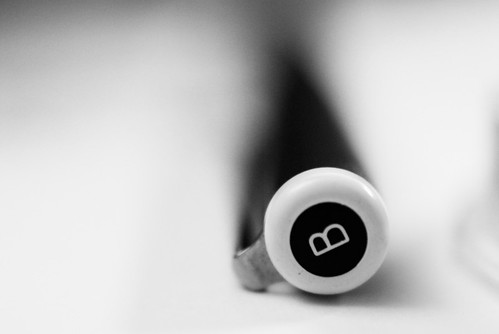
B

I've left school PR.
I can now call myself a former education communication professional. It was time for a change. I found myself at a crossroads of sorts in my career. It felt like I either needed take a deeper dive into PR and public education or seriously explore other opportunities.

I chose the latter.

To be clear, I've loved my 13 years (including the last eight in a public school district) in school PR. I've worked with a truly remarkable team and I will miss working alongside those dedicated professionals with a heart for education and communication innovation, and a relentless pursuit for what's next.

It was time to see what's next for me.

After a while in school PR one starts to get the hang of things. The school years seem to come and go. While each year is distinctive, you pretty much much know how it'll end up. The trip may be a little chaotic, but you already know the general destination. It's good, some years, really good, but it's also a little predictable.

So what changed?

Me. I think I changed. I look back over the last several months and certain things strike me as being signs of things to come. I didn't notice them at the time, but looking back I believe things shifted. It's telling to me that it's been quite some time since I've sat down to write a post. It's hard to say if that's because I got lazy, busy, bored, or a combination of the three.

On to plan 'B'

I'm heading to Balcom Agency next week (get it, plan 'B'). It was time to stop letting my comfort zone be a barrier for me from fully exploring my career growth. I don't yet know how it will go, but I've received some excellent feedback and support on what others see in me and what I have to offer. Having never worked in an agency setting before, I'm anxious to see how the process works with clients. But I'm loking forward to the new challenge. In fact, I think it'll B great.

It's too soon to determine what, if anything, will change about this blog other than perhaps less of a focus on PR in an education setting. If possible, I hope to come back from time to time to write as much for my sanity as it is for others' professional learning.

Thanks for reading and I hope you stick around for what's next.
---
Photo credit: dr via Flickr Creative Commons

Tuesday, April 8, 2014

On Working Together

Our PRSA chapter recently held a joint program with our friends at AAF Fort Worth and Social Media Club Fort Worth to host author/speaker Jackie Huba for a fun evening at Four Day Weekend Theater. This night on the town took well over four months to coordinate, as the organizations' presidents met and e-mailed each other to work out details.

The groups share a few members, and we all recognized an opportunity to join forces on the March 27 event to meet our common desire to provide quality programming. We had a great time, too, as you can see by the photos on our Facebook page.

One day before, March 26, the Ft. Worth Star-Telegram and WFAA-TV announced their own partnership. A content sharing partnership. 

"The news executives said their companies will share a wide range of content, including breaking news, sports, business, traffic, weather, dining and entertainment from all over North Texas. They also expect their staffs to work together occasionally on joint projects."

Both of these partnerships, our three organizations and the two local news outlets, caught some people by surprise. They took planning. They took not being afraid to fail. Hopefully when we look back, they will have provided positive outcomes. But if it was a fail, let us fail forward with intelligence gained.

My point is, I believe we are stronger together than we are separate. Unlikely mass communication compatriots can (should?) occasionally work together for the greater good. It might be one of the things that keeps us all afloat.
Corey Lark (SMCFW president), Jackie Huba, Rene Murphy (AAF FW president), and me.
---
A version of this post appeared as my President's Column in the eChaser newsletter.

Wednesday, February 5, 2014

Stuck between a shock and a tarred place

I first considered writing another column about the solid program we have for members and guests at the next luncheon. But that seemed like fluff when put up against a local, sensitive topic, the discussion of which substantially advances the PR profession and professional.

Sometimes working in PR and strategic communications sucks. That's where I believe the leadership and communications teams at JPS Health Network found themselves over the last few months. The situation of a patient and family leading up to a judge's ruling and follow-through on the order is unbelievably sad. To be clear, I have no interest mulling in print the thorny sociopolitical issues of this episode because it is so emotionally charged. Instead I would point to the well-presented and effective updates JPS released to the media.

JPS was stuck between a shock and a tarred place. No outcome was pleasant. Whether you're an in-house PR pro or hired consultant, in health care or nonprofit, a corporate communicator in education or in any part of the vast PR realm, at times things will go wrong. And the pain, the hurt, the confusion can last months.

Communication professionals provide strategic value to an organization in situations like these by being the voice of reason, conscience or even dissent to help leadership through the thicket. At such moments I appreciate the colleagues I know through PRSA who can help me strengthen an idea, clarify some wording, or just be a friendly ear. It’s great to know I’m not alone.

I tip my hat to the JPS Health Network communications and community affairs team. 

You do good work.
---
Photo credit: brookenovak via Flickr Creative Commons
---
The content for this post first appeared in the February eChaser newsletter as the my submission for the monthly President's Column. The eChaser is a joint digital newsletter for the Greater Ft. Worth Chapter of PRSA, SPJ of Ft. Worth, and IABC Ft. Worth.

Thursday, September 12, 2013

Ft. Worth @StarTelegram requires Facebook for comments; good for discourse, bad for trolls

In a move that I hope will send some of those online trolls to cower under their bridges away from the light, the Ft. Worth Star-Telegram announced this week that they will now require users to log in to Facebook to use their commenting system.

In his announcement, S-T executive editor, Jim Witt explained that the reason was pretty simple: "Facebook requires account holders to use their names, and we believe that anyone who wants to contribute to our public forums should put their name on it."

He then went on to bolster the argument for signed (in) online comments because of the difference in discourse between those that were anonymous vs those that come in with real names attached.

"In signed letters for our print editions, writers make their points using reasoned and usually reasonable arguments. But online, comment threads too often devolve into a cesspool of name-calling. On some stories, we are forced to turn off the commenting feature because the language becomes too offensive. 
"In talking to readers, I’ve found that many have been discouraged from commenting because they are turned off by the nastiness."
I believe this is a smart move for my local paper and one that hopefully will raise the intelligence quotient a bit on stories that matter to communities across DFW covered in the paper. It seems to me the S-T recognizes that for at least the near future, Facebook doesn't appear to be going anywhere. And other media outlets use it as their commenting system of choice for some of the very same reasons as outlined in the S_t announcement.  
Why is this important for PR? Since a function of PR includes media relations, it's part of our job to know how the stories are getting developed, sourced and told. We should also know to whom we connect a journalist in order to provide the trusted source they need. (Hint: it's often not the PR person.) We've seen that a growing number of journalists are finding and using sources from social channels.

"...51 per cent of journalists worldwide say they use microblogs (e.g. Twitter, Facebook and Weibo) to gather new stories – provided the source behind those accounts is known and trusted by them (2012 figure, 54 per cent). As was the case in 2012, reliance on these sources falls dramatically when the sources are not known to the journalist: 25 per cent say they source stories in this way." [Oriella PR Network Global Digital Journalism Study 2013]
The study also indicates that in certain respects, a journalist's success on stories now tends to be measured in the number of unique visits, number of views, increase in social followers, likes/tweets on articles, and number of online comments along with advertising revenue and exclusive features.

I hope our journalist friends over at the Star-Telegram will take this shift to Facebook commenting as an opportunity to engage in what could be ongoing dialogue on the important issues in the community. It is not out of the realm of possibility to have a trusted source from within the organization chime in through article comments (if it's in the best interest of the organization s/he is representing) to provide clarifications, corrections, or contextual additions. This might give pause to some especially for those who don't like to mix work life with home/community life. I believe we've reached the point that our online professional and personal selves are blends now and we should treat online communication as such.

TL;DR
The Ft. Worth Star-Telegram now requires Facebook for article comments. It's a good thing and online trolls beware.


Photo credit: Doug Wildman via Flickr Creative Commons

Tuesday, April 30, 2013

First Follower Leadership and the Communications Pro

In the last few months I've had various people share or present on the (now widely popular) video, First Follower: Leadership Lessons from Dancing Guy. 

It's a pretty simple, great video lesson on leadership from Derek Sivers. If you haven't already, take three minutes and watch it:
"...Being a first follower is an under-appreciated form of leadership. The first follower transforms a lone nut into a leader. If the leader is the flint, the first follower is the spark that makes the fire..." [full transcript]
So why is the first follower leadership lesson important for communication professionals? We have dual roles for movements within an organization: Communicators should serve as (one of the) first followers or promoters of the first follower(s) for senior management. From an internal communication perspective, the communication and public relations team should be on the front-line to help propel a movement for employees. We should look for and share the bright spots in programs and initiatives to fan the flames of positive progress so others can see the how and the why and importance of things.

Sivers sums it up nicely: 
"It was the first follower that transformed a lone nut into a leader. There is no movement without the first follower."
Are you a first follower?

Friday, April 12, 2013

Scope media coverage before sending your news release

Yesterday, a horrible bus accident occurred in Irving, TX on a major highway. A private charter bus carrying seniors to an Oklahoma casino veered across a busy DFW freeway and crashed. First responders, onlookers, and local media outlets quickly portrayed a chaotic scene for rescue of dozens injured or trapped inside and unfortunately, recovery of two people who lost their lives.

As the story developed, national news coverage broke with local affiliate footage from the scene as well as area hospitals where trauma teams awaited the arriving ambulances. The media echoed the calls from first responders to alert area motorists to avoid that and nearby roads. Additionally, reports came in citing the clean record of the bus company. The investigation will continue, but for the most part, I think it was a solid example of textbook media coverage for area outlets. As residents in DFW, our hearts go out to the victims and their loved ones affected by the accident.

So what does this tragic accident have to do with public relations? Yesterday was not the day to send irrelevant news releases to local media. I was reminded of this as we had some district information to share in partnership with a local hospital on something pretty fun for elementary students. But...yesterday was not the day to send out our news release. It was not the time to bother with something lighthearted in comparison to the day's events on the roadway.

The lesson: PR pros must pay attention to what's happening in local media coverage before pushing send on news that will fall on deaf ears because of something much more important. Situational awareness is a valuable asset.

Thursday, March 7, 2013

Texas Rangers Ryan-Daniels Drama Power Play or Publicity Stunt?

The Texas Rangers issued a press release at the end of the day on Friday, March 1 at 4:54 p.m. CST with a headline that read, "Jon Daniels Named President of Baseball Operations/GM - Rick George Named President of Business Operations." This left the obvious question hanging out there of what's going to happen with Nolan Ryan, who up until Friday was President/CEO? The release explained that like this:
The Texas Rangers announced today the promotions of General Manager Jon Daniels to President of Baseball Operations/General Manager and the promotion of Chief Operating Officer Rick George to President of Business Operations.
In their respective roles, Daniels and George will continue to oversee the day-to-day baseball and business operations of the Rangers organization under the leadership of Chief Executive Officer Nolan Ryan.
And so the Dallas/Ft. Worth sports media proceeded to go absolutely nuts. One of the first to do so was longtime baseball writer/columnist and ESPN radio host, Randy Galloway who was quick to speculate that this move might signal the end for Nolan Ryan. Others piled on over the weekend and well into this week in the local jock media kingdom and abroad. 

The media has portrayed this move as a power struggle between Jon Daniels and Nolan Ryan. At one point we've heard Nolan Ryan could be out by season's end or as early as the end of spring training. Speculation and rumors have been swirling since day 1 and it has truly been interesting to observe locally as a sports (and Rangers) fan and as a public relations pro. 

Bungled PR or Savvy Publicity Stunt?
One of the common themes that's out there is that the Rangers front office had bungled the public relations aspect of this news. At first, I was on board with this assessment. First, they release the news at the end of the day on a Friday anticipating some level of attention, but hoping the weekend takes care of most of the issues. I didn't see/hear/read anything from the Rangers organization until Tuesday of this week with the new President of Baseball Operations/GM, Jon Daniels basically saying all is well, nothing really has changed. By that point, the narrative of major speculations and rumors had taken over. 

The media had settled on this was either a power grab by Jon Daniels or ownership being more interested in keeping Daniels (the young baseball mind) over Ryan (the Hall of Famer and well-loved veteran). If you frame this as a fiasco waiting to happen, then the Rangers' ownership has seriously miscalculated the fans' potential for push-back and disdain. 

At least that's how the media has portrayed this mini-drama will/would play out.

But what if it was orchestrated this way? What if the Rangers ownership, Nolan Ryan, Jon Daniels, and Rick George (who ever that is) were all in on this as a way to get major media attention. Since the announcement, the Texas Rangers have been at the top/front page of most local media outlets sports pages and newscasts. If it is/was an elaborate ruse to get tons of coverage while in spring training, it's working. 

A quick look at the local sports landscape is good for this type of play. The Dallas Cowboys are not major news right now, the Dallas Mavericks are struggling to keep playoff hopes alive, and the Dallas Stars are trying to get people to remember they like hockey. The Rangers lost some key players, personalities, and bats. They are continuing with their youth movement. The team, in my opinion, will be contenders again, but will do so with the strong players on the 40-man roster as well as minor league talent. But all that doesn't keep the attention of the casual sports fan until the season starts (or well into the season). This team news provides that narrative of controversy and puts the Rangers front and center. 

Maybe I'm wrong, maybe this is a sign of real fissures within the team management and foreshadows rough days for the team in the very near future especially if the fans revolt. But all it would take for this to stop would be for Nolan Ryan to come out and say publicly, in his classic country drawl, "everything is good, I'm fine and we are looking for another great season of Texas Rangers baseball." If he said that, the story would have nowhere to go and we'd move on. If he said that, this episode might have just been all a publicity stunt. And it will have worked.

(Photo credit: phoca2004 via Flickr Creative Commons)

Monday, January 14, 2013

Thoughts from a blogging hiatus

Hiatus - n. 1. A gap or interruption in space, time, or continuity; a break

I took a break from blogging. The holidays provided a much-needed opportunity to enjoy my family and recharge. It also gave me a catch up on some things professionally. The first was the transition from being in charge of programs to membership for the Ft. Worth PRSA. This led to some reflecting on what volunteering means for professional development. The second was time to consider the local implications of recent news-making issues in education (campus safety and security, testing, and funding). And lastly, I came across an intriguing idea for blogging worth exploring: topic buckets. 

Volunteering and Professional Development
In 2012, I was the VP of Programs for Ft. Worth PRSA and I think we put together a solid mix of luncheon programming and evening mixers for networking and knowledge. Over the break, a group of chapter members volunteered at a local mall manning the Salvation Army Angel Tree table for our service project. We assisted people in the Angel Tree donations process who wished to bless some families in need. If your group has opportunities to serve your communities, don't limit yourselves to the specific roles for which you gather. Instead of helping a nonprofit by crafting press releases or writing communication plans, a simple service project with peers met a need and made a difference.

I'm looking forward to 2013 and continuing to serve alongside a dedicated board members and committee chairs intent on continued growth for the professionals and profession. If you are a PRSA member (or any professional communication or public relations organization), please consider giving back as a volunteer. It can be a great opportunity to network with regional PR pros, learn from the experiences of others, and gain valuable feedback on your own work through connections and conversations.

Education issues and School PR
Working in public education always has its challenges and mandates from revised curriculum, accountability and testing, funding, extracurricular, attendance zoning, school choice (school vouchers in disguise) and the ever-popular, local taxation issues. Those challenges are magnified in Texas when the Legislature is in session. To be honest, school district employees in Texas hold our collective breaths when lawmakers come together every two years. We wonder what new ridiculous  unfunded mandates will befall educators, schools, and districts this time? Or, as in the last session, how much will the state cut in education funding this year? (During the last session, the Legislature cut $5.4 billion from public education.) 

This time, the realities are clouded even more because of major campus security debates across the country following the elementary school shooting in Connecticut in December. There are absolutely no easy answers to these and other issues for public education. That said, I absolutely believe school districts need to lean on professional communicators to help explain, explore, and expand on important topics facing public education. 

My advice for school PR pros is to pay close attention to the major issues and potential laws impacting education. Thankfully, we work with experts in curriculum, testing, finance, etc. at our districts that each of us should turn to for briefings on these areas. I'm also thankful for the Texas School Public Relations Association (TSPRA) has some plain-English resources for school PR pros on many of these same issues.

Topic Buckets and Blogging
On January 6, 2013, I caught a random tweet from the #blogchat Twitter chat about Topic Buckets as a way to organize and plan your blog. From mackcollier.com:
"...You want to blog more often, but coming up with ideas is sometimes tough.  Something that has helped me is organizing your blog’s focus into Topic Buckets. 
The basic idea is this: Pick 2-5 main topic areas that you want to cover on your blog...Now the great thing about Topic Buckets is that they really help you organize your posting patterns. You may be trying to think about how you can blog 2-3 times a week, but if you can create 2-3 Topic Buckets, then all you have to do is write one post a week for each topic, and you are set! Also, it’s a good way to keep track of what you’re blogging about..."
I let that idea simmer a while and have concluded that using Topic Buckets is an idea worth trying and sharing. I'll need to leave that idea unfinished at this point until I can come back with more details on how topic buckets can improve my blogging experience on this one and the blog I manage at work.

See, taking breaks is good.

Photo: svenwerk 

Tuesday, May 15, 2012

Thank you, Instagram for adding an Android app

Confession time, I've become a huge fan of Instagram. I wouldn't say I'm quite to the point of addiction or anything, but I'll admit the reinvented photo-sharing is the bees-knees. Yes, I know, I'm all sorts of late to the party on this tool in large part because Instagram was previously behind the wall of the iPhone.

But then, it happened. Instagram launched an Android app.  

Woohoo! went the chorus of Android smartphone users who had privately (or publicly) been longing for the day when we too could enjoy the fun of sharing photos on one of the hottest, growing networks. Now we could join in the fun of sharing images and use photo-altering filters to change the look a bit on a whim. Admittedly, I thought this was going to be a little silly based on the images that I had previously seen in my Twitter and Facebook streams from friends (with iPhones) sharing their Instagram photos. But that was before I got to give it a go on the playground.

I was sold! The photos, filters, network, tagging, commenting, likes, etc. are wicked fun. I now completely get why Arik Hanson was so impressed with Instagram based on some informative and fun posts and from seeing his photos myself.

It's been just over a month since news spread far and wide about Facebook's acquisition of Instagram for a staggering $1 billion. After the announcement, there was much gnashing of teeth and tearing of garments by people lamenting Instagram selling-out to Facebook and what it might do to the photo-sharing service. But then again $1 billion for a tool with no ad-revenue was and is still pretty impressive for the Instagram team.

So what does this have to do with public relations? I'm interested in some examples of ways professional communicators can use Instagram, but right now I'm in the experimenting phase. I'd  love to know what you think either personal or professional use of Instagram. As always, the comments are yours.

Photo credit: Me, via Instagram because I love UNT and the Mean Green.
Enhanced by Zemanta

Saturday, March 24, 2012

Lessons in pride and service from Mamá


I recently returned from a short-term music mission trip to Spain for my church. Among the many remarkable experiences, one struck me as being particularly relevant for me as a professional communicator.

We had the opportunity to dine at Casa Camara in San Sebastián for lunch one afternoon. Upon arrival, we were greeted by a woman whom we affectionately came to refer to as Mamá. The lunch crowd was rather large and we could not be immediately seated. In the U.S. this really is not a big deal and is typically just a sign that the restaurant is most likely a bit popular among restaurant goers. However, Mamá seemed really concerned that we could not sit down at one of their dining tables. She could only seat us at a much-too-small table for our 10 guests.

Sitting at the smallish table was going to be perfectly fine with us because we were pleased to be in and looking forward to the meal. Mamá seemed to serve as equal parts hostess, waitress, owner, sommelier, cleaner, and coat-checker. She made sure we had a clear understanding and appreciation of the menu.

As a few tables cleared, Mamá ushered us from the small table to a spacious dining table. I came to understand from our trip's host/translator that the first table was something of a staging table at which she was embarrassed for us to remain. That is why she jumped at the chance to move us to a more suitable table. He explained that she could not let us experience the meal improperly.

He was not joking.

This was not a stuffy restaurant where the maître d' looks down his nose at the guests. This felt comfortable. Mamá could teach any maître d' a few lessons in pride and service.

I was impressed with the way Mamá took care of us as she did at every table in the restaurant. From suggesting the appropriate appetizers to accompany our main course selections, to overseeing the meal's finishing touches. This woman beamed with pride in the way the entire service staff flowed around the tables. It's difficult to put into words the sense of care she took in everyone's experience while seeming to exert minimal effort as bright red sweater flitted about the restaurant.

Lessons from Mamá:

  • Removed the phrase, "that's not my job" from your vocabulary.
  • Guests deserve the best-possible experience.
  • Knowing your business inside and out makes you indispensable.
  • Taking pride in your work can be almost palpable when done correctly. 


Mamá seemed genuinely surprised and amused with us when after the meal, we asked if she'd allow us to take pictures with her. She even stated, in Spanish, "you don't want to take a picture of me, I'm not Julia Roberts." (Awesome.)

There was no doubt Mamá has a servant heart and takes extreme pride in her work and her restaurant. We can all take a lesson in service from her.

Thursday, March 8, 2012

Short Pause for a Cause: Spain Bound


I'm taking a short pause in my blogging here for next 10 days or so while I travel abroad to Spain for a short-term music mission for my church. Instead of sharing some thoughts on strategic communication, PR ttopics or other typical professional fare for this blog, I'm opting to share a more personal side to my life. 

In addition to being a school public relations guy, I'm also a musician and serve on my church's worship team. Playing music is a passion for me and my favorite creative outlet. Add to that the chance to serve and this promises to be a remarkable experience. If you're interested, our team has a blog that you can follow along.

Until we return,

R

Monday, January 30, 2012

Just keep writing

200 eYe eYe
Photo via kentigern
I was pleasantly surprised to find that this is my 200th blog post. (Woohoo.) It's sort of like watching your car's odometer roll over to a high mileage. Now I know I'm not in the upper echelon of bloggers and I honestly didn't think I'd have anything to say of any consequence. There are tons of other writers who do a much better job. Many of whom I read daily.

This blog was started as a way for me to pass along the strategies, tactics, tools, and tips that I'm learning as a communication professional. It has had some hits and misses. Not everything gets noticed, or comments, but it's been well worth my time to take a look at a variety of topics and trends in public relations. I've gone through my bouts of writer's block as have most writers. There have been short pauses here and there to get my thoughts together. There have also been times when I wished for more hours in the day so I could get thoughts down and fill up this white screen in the hopes of helping out others who've come across similar issues or who identify with problems or ideas.

To the writers that I read for brilliant thoughts, trends, or topics (such as Geoff Livingston, Kami Watson Huyse, Arik Hanson, Deirdre Breakenridge, Gini Dietrich, Mike Schaffer to name just a few): Please keep up the great works. Each of you (along with so many others) provide a tremendous wealth of resources and discussions.

To the readers who stop by this blog frequently (or infrequently) as well as those who at some point decided to receive these blog posts via email: Thank you.

To the new(er) bloggers out there who have ever felt discouraged by the writing process or who hit that wall and don't think it's worth it anymore: Just keep writing. Get that groove back.

Cheers.

Sunday, January 8, 2012

The Best Communication Tool: Your Brain

While flipping through my Pulse newsfeed I ran across a headline that required a double-take and click-thru: Coffee Cup Alerts Mount Rainier Campers. I was familiar with the bizarre and tragic story that unfolded last week in Mt. Rainier so I had to see what a coffee cup had to do with things.

On Monday, January 2, four Seattle hikers were enjoying a weekend of winter camping at Mount Rainier National Park when a helicopter buzzed overhead with a mostly incoherent message through a loudspeaker. The campers were unclear as to the pilot's spoken words, so he went to Plan B. He dropped a coffee cup with a warning written in black ink: "A ranger has been shot shooter at large. Call on cell if able to Pierce Co Sheriff."


Communication Win
In addition to things working out in the end for the campers as they made it to safety, I also really like this story from a communication professional's perspective. This is a fantastic reminder that quick-thinking and creative problem-solving are sometimes necessary to get a message across. Those typically faithful effective communication options and channels may fail you when you least expect it. Do whatever it takes to communicate. Be ready for your Plan B.

I think one the comments from the Discovery News post said it best: "This proves (again) that the best tool humans could ever have is brain. With or without technology at hand."

What do you think? As always, the comments are yours.


--------------


Photo credit: NWhikers.net along with more images and a full report from the campers
--------------
(BTW, Pulse is a sweet interactive mobile news aggregator if you're looking for one.)

Sunday, January 1, 2012

New Year's Hat Tip For PR Triumphs

There's no escaping the glare of ever-present shine of media, masses, and individuals waiting to pounce on the failures of others. As 2011 came to a close, another round-up of listings of public relations blunders made their yearly trek around the interwebs. (Some examples here, here, here, and here.)

This brief Twitter exchange between Shel Holz and Richard Becker got me thinking about the topic:


Indeed.

So let's take a moment to start 2012 with a hat tip to all of the public relations pros who got it right. Congratulations to all of you professionals who achieved strategic communication victories big and small. Great job on deepening those relationships within your communities. Thumbs up for releasing relevant stories and engaging a variety of communication channels.

PR triumphs happen on a regular basis throughout our industry because they represent business as usual for public relations. Often these wins go largely unnoticed.

And that's a good thing.

If an organization's leadership or clients expect business success and acumen from the PR team, then the credibility of our profession is buoyed. When things go wrong, learn from the mistakes (yours and others) and move on to what's next.

Who's with me?

Photo credit: ooberayhay via Flickr Creative Commons

Monday, December 12, 2011

Keep your job; update your résumé

résumé - n. 1. A brief account of one's professional or work experience and qualifications, often submitted with an employment application.
---

When was the last time you updated your résumé and why did you do it? Most likely it was while you were searching for a new job and/or because you were ready to leave your current position. Do you regularly update your résumé when you have no plans on leaving?

Assuming you are in good standing with your employer and there is minimal cause for concern of being a downsizing casualty, you probably ignore your résumé. Your short summary of work experience can quickly become an anemic relic to the point of being pretty useless. Bad move.

Regular résumé updates can help you keep your job. Your résumé can be invaluable as your concise record of professional progress, achievements, and assets. Think of it in terms of your own professional ROI. During performance reviews, if you've kept a current résumé, you can point to specific initiatives, projects, or objectives that you've met. And of course, that same résumé will hopefully serve you well when it's time to leave and move on to a new opportunity. Save yourself the time and headache of trying to recall accomplishments from days/months/years ago once the urgency sets in because you're seeking new employment.

What do you think? Is it worthwhile to keep your résumé ready?

---
On Thursday, December 15, the Help a PR Pro Out (HAPPO) community will once again hold a Twitter chat. The topic? Résumé writing. Check out the details from Arik Hanson's blog: HAPPO chat set for Dec. 15 on resume-writing tips

When will it be held? Thursday, Dec. 15, noon-1 p.m. CT
How do I participate? Jump on the Twitters [Thursday, December 15] and tweet using the #happo hash tag, as always.
How will the chat be organized? We’ll have 5-6 questions to discuss, and our HAPPO champs from across the U.S. will be chiming in with their personal advice. And, of course, we’d love to hear your thoughts and ideas, too.
(Photo by hanzabean via Flickr Creative Commons)

Monday, November 14, 2011

Being a 'What's Next?' PR Pro

Martin Sheen, who provided the voice for the r...Image via WikipediaI loved watching The West Wing. To this day, if I come across it on television I make a point to watch because of the compelling storyline and characters.

One of the random things I took away from the series was a simple two-word phrase by Martin Sheen's character, President Bartlet: What's next?

When Jed Bartlet is in the early stages of his campaign, and his new young crew is laying out the terrain, he says: “What’s next?” – and then, “When I ask, “What’s next?”, it means that I’m ready to move on to other things. So, what’s next?” [source]

What's Next? and Public Relations
A PR pro with a What's next? mentality is a significant contributor in an organization. You can get caught up in the wins/losses of the day or you can decide that whatever this day brings, tomorrow is next and you need to be ready. I think what helps position PR professionals the best is an ability to enjoy the moments of victories (or lick your woulds after defeats) but then quickly pursue the next challenge ahead.

Consider these: Congratulations on that local/state/national media placement. Way to go, you successfully navigated your organization's leadership through some sticky community relations problem unscathed. Take a bow, that newspaper editorial board is on your side for a change. Well done, you were able to convince your executive to dismiss a bad idea that could have been a catastrophic. Three cheers, you got out in front of a crisis situation and were able to tell you side of the story and thus helped with balanced reporting.

The above are a small sampling of what I'd consider to be public relations victories.

But...

Public relations professionals must take the wins, along with the losses, in stride. Too many things are out of your control. Being ready to move on to other things allows for an appropriate level of professional detachment from situations. This comes in very handy during particularly stressful situations. Additionally, having situational awareness is a valuable asset for an organization. You know when things are working well and you should be able to tell when things are going straight down the tubes. Make adjustments and keep moving forward.

Don't spend too much time patting yourself on the back when things go well or kicking yourself in the rear when things go poorly. Instead, look for what's next.
Enhanced by Zemanta

Wednesday, October 26, 2011

Turning Rejection Into Opportunity

Today I received my first rejection for a conference presentation proposal. I really enjoy speaking engagements but unfortunately my proposal didn't make the cut for the Spring conference.

At first, I was disappointed and immediately felt the stirring of self-doubt creep in. And then it hit me: No presentation, means no preparation. Uh oh.

Like I said, I really enjoy speaking. However, the value for me as a speaker is what I do to to prepare, research, and compile thoughts, data, and insights to be shared with an audience.

So I decided to turn this rejection into an opportunity. Rather than research and prepare to share for someone else, I'm going to study, prepare, and finally become Accredited in Public Relations. I've been flirting with getting the APR few a couple of years now (yikes, I'm such a slacker). Well now I can't use the excuse of having to prepare for a conference presentation which has become common the last few years. 

More to come.

Photo Credit: picsonline via Flickr Creative Commons

Thursday, September 8, 2011

PR is lost without Ethics

September is Ethics awareness Month for PRSA. I appreciate that the national organization (of which I am a proud member) highlights this important aspect of the public relations profession. According to the PRSA website, Ethics Awareness Month seeks to "inform and educate the public relations profession about ongoing issues and concerns regarding PR ethics."

We talk a lot about reputation management for our clients and organizations. But what about for ourselves? What's your reputation worth?

PR pros must be proactive in maintaining our own credibility. Thankfully, I have never been faced with a situation where I was asked to intentionally mislead, lie or cover-up something on behalf of an organization. And I hope I never will.

But I think it's bigger than an individual decision. Every time an apparent ethics breach occurs and a PR pro is caught in the middle, or worse, the cause, our profession veers off course. Collectively, we lose and the profession is lost without a foundation of ethics.

Take a close look at the fist line of the PRSA Member Code of Ethics pledge:
I pledge:
To conduct myself professionally, with truth, accuracy, fairness, and responsibility to the public...
PR ethics is one of those areas that sadly, sometimes gets forgotten from within, mocked from outsiders, and keeps us from taking steps forward.

I've heard for years about how we need a PR campaign for the PR profession. Well it starts with a focus on ethics to (re)build our profession's credibility.

I love the call to action over on Neville Hobson's blog on this topic:
Why don’t we all make September our own ethics awareness month by asking ourselves: What am I going to do?
Here’s a start: before the end of this month, read your respective professional association’s code of conduct:
(If you’re not a member of any of these bodies, read the codes anyway.)
Fantastic idea.
Enhanced by Zemanta

Friday, July 1, 2011

For a little while, PR means 'Person Resting'

Pause ButtonImage by Kevin Grocki via FlickrI'm a school PR guy in need of a break. Looking back at the last school year (2010-11), I can easily say that it was one of the more challenging years. And looking ahead at possible hurdles next year makes me glad we've started to take our communication department's planning to greater levels this summer.

But for now, it's time for a pause. 

I have a wonderful benefit of having days for vacation. It's time to recharge my mind, enjoy some fun with my family, and remind myself that my focus in life goes way beyond the realm of public relations and school district communications.

As for work, there's much to be done, prepare, ponder and explore. I'm looking forward to (almost) all of that. I plan on being refreshed and ready for what's next. And it'll be because at least for a little while, PR will mean "Person Resting."

And to you, dear reader, I hope you take opportunities to be a Person Resting too.

Cheers!
Enhanced by Zemanta

Thursday, May 5, 2011

Closing a School District's Facebook Page

Facebook logoImage via WikipediaAfter approximately 20 months of building a (mostly) positive online community, my school district has shut down its Facebook page.

In an explanatory blog post, we shared the following in part:
"Mansfield ISD will no longer host district or campus-level Facebook pages. The open nature of the Facebook commenting feature continues to cause regular disruption and place the district as a liable participant in issues related to sharing of private student information, defamation of employees and other abusive online behavior. In addition, MISD is not able to commit the administrative or campus staff time necessary to adequately moderate user content posted to these pages."
Those of you that know me know that I am huge advocate for integrating social media tools into communication and public relations work flow. Facebook page management was/is among those tools I recommend.

Be careful what you wish for...
With the District page open for community commenting, of course we created and posted the rules of engagement to back up our removal of inappropriate material. We wanted feedback. We got feedback. Not all of it positive. Which was, and is fine. Getting useful feedback from the community on news and information was an objective since it helped us determine if messages were being received. The human element of the social web will always bring out critics and critiques. The problems came when those were aimed at students, parents, community and individual staff members.

So what changed?
In essence the liabilities were outweighing the benefits of the district's Facebook page. We became keenly aware of just how much time it was taking to adequately monitor the page in order to remove postings that were abusive and/or offensive.The page audience grew to a respectable 6,900 fans ('Likes') connected to it. Unfortunately, somewhere along the way it reached a point where detractors (passionate and occasional) decided to use the commenting features to share negative information and feedback about individual students and staff members. There were also instances of bickering and arguing with each other including back and forth between kids and adults that sometimes left the realm of civil and intelligent discourse. I know that is shocking to anyone who has a personal Facebook profile. (sarcasm)

Perhaps there was a magic number of fans or tipping point for the community that marked this shift. It's hard to tell.

Why not just turn off the comments for the page?
In the current Facebook Page editing capabilities, Admins can toggle on/off the Posting Ability to adjust the setting "Users can write or post content on the wall." But, that only stopped new comments going to the wall, not on previous or new posts shared by the Page. That setting simply doesn't seem to exist right now. Admins still have to watch and delete inappropriate replies and ban users if necessary. So it's still a moderation/time issue.

Moving forward
If school PR people want to start/continue to use Facebook pages, I would recommend you make sure you (1.) have a policy that includes a response protocol for negative comments and inappropriate posts and (2.) set aside time, resources and money to listen to and moderate the conversation about your school district. This time resource is a sticky one. We could no longer sustain a level of moderation with the current Facebook Page administration capabilities to meet the growing demand for nearly constant oversight.

Does this mean we are backing away from social media? Hardly. Consider this:
Facebook ≠ Social Strategy

I do not consider adopting any one single social media tool, even the current front-runner, Facebook, as being equal to having a social strategy. The underlying reasons or objectives behind why you use these communication tools and how you evaluate and measure their effectiveness are what ultimately propel an organization's success.

What do you think? Have you run across these commenting management issue on pages you run for your school district or clients? I'm curious to know what others think. As always, the comments are yours.

Related articles
Enhanced by Zemanta